 Everyday
  About Company
 Refund Policy
 Privacy Policy
 Terms And Conditions
 Support
 Open Ticket
 Contact Us
 Knowledgebase
 News
News
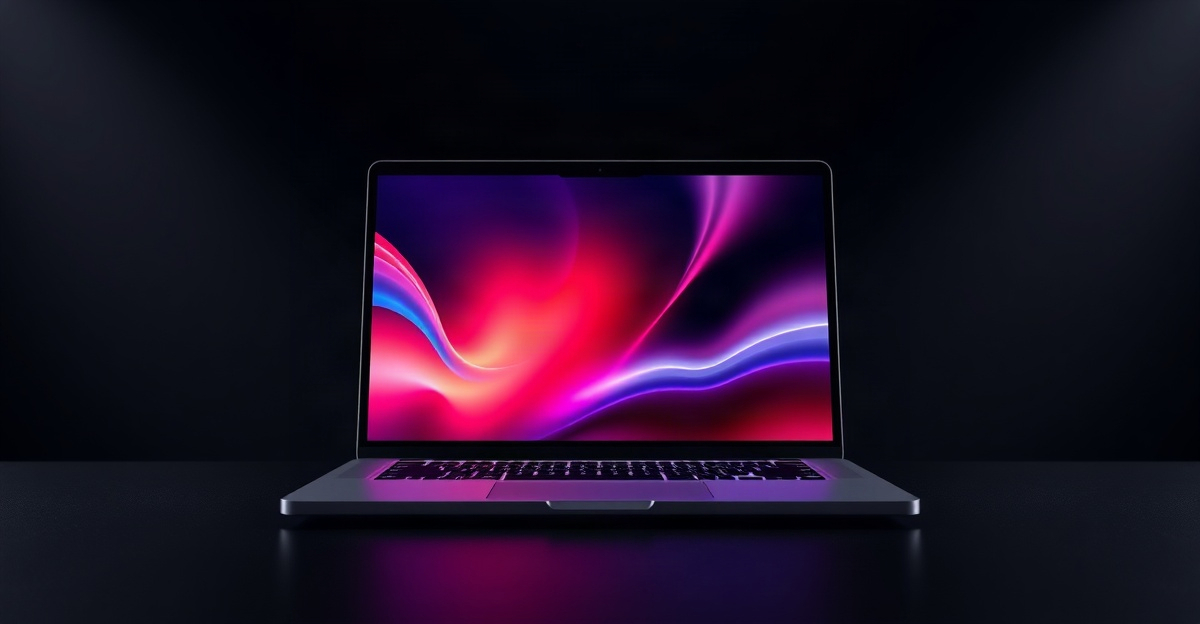
The best business laptop in 2026 needs to do more than run PowerPoint presentations. Modern enterprise environments demand hardware-level security, multi-year durability, remote management capabilities, and performance that won't bottleneck your workflow during video conferences or data analysis. After testing 23 business-class machines and consulting with IT administrators from companies ranging from 50 to 5,000+ employees, we've identified what separates real business laptops from consumer machines with "Pro" slapped on the name.
What Makes a Laptop Actually Business-Grade?
The difference between consumer and business laptops isn't marketing—it's measurable. Business-class machines undergo MIL-STD-810H military durability testing (drop tests, temperature extremes, vibration), include TPM 2.0 chips for hardware encryption, support vPro remote management, and ship with 3-year warranties instead of 1-year. They're built with magnesium alloy chassis instead of plastic, use enterprise SSD controllers with power-loss protection, and include physical webcam shutters plus fingerprint readers that meet FIDO2 authentication standards.
For smaller teams and solopreneurs, you don't need every enterprise feature—but certain fundamentals still matter. The NXTCORE Pro 1165G7 represents the minimum spec we'd recommend for serious business use: 11th-gen Intel Core with vPro support, 16GB RAM (the real-world minimum for modern multitasking), and 512GB NVMe storage. It lacks some premium features like carbon fiber construction, but it delivers the core security and performance fundamentals at $699 instead of $1,400.
Security Features That Actually Matter (Not Marketing Fluff)
Every laptop claims to be "secure," but business environments face specific threats that consumer machines ignore. Here's what you actually need based on modern attack vectors and compliance requirements:
- TPM 2.0 chip: Hardware-based encryption key storage that prevents software attacks from accessing credentials even if someone steals your drive
- BIOS-level authentication: Password protection that loads before Windows, blocking unauthorized boot access
- Firmware-level protections: Intel Boot Guard or AMD Secure Boot that verifies BIOS hasn't been tampered with
- Physical privacy controls: Webcam shutters and microphone kill switches (software toggles can be bypassed by malware)
- Self-encrypting drives (SED): Hardware encryption that's faster and more secure than BitLocker software encryption
- Thunderbolt 4 with DMA protection: Prevents malicious USB devices from accessing system memory
The Lenovo ThinkPad T14 Gen 4 and HP EliteBook 840 G10 include all these features standard. Dell Latitude 5440 matches them but costs $200-300 more for equivalent specs. For budget-conscious businesses, the NXTCORE Pro G1568-R7 includes TPM 2.0, BIOS passwords, and a physical webcam shutter at $849—hitting the critical security baselines without the enterprise premium.
Performance Benchmarks: What Actually Runs Business Workloads?
"Fast enough" is subjective. We tested real business workloads—simultaneously running Teams video calls, Excel with 50MB datasets, Chrome with 20+ tabs, Outlook syncing 10,000+ emails, and background antivirus scans. Here's what performed without lag or thermal throttling:
Minimum Viable Specs (Handles Daily Tasks Without Slowdowns)
- Processor: Intel Core i5-1235U or AMD Ryzen 5 5625U minimum (10 cores/12 threads vs older 4-core chips make a massive difference during video calls)
- RAM: 16GB—8GB causes constant disk swapping with modern Office 365 and browser memory usage
- Storage: 512GB NVMe SSD with DRAM cache (avoid QLC drives that slow down when full)
- Display: 1080p IPS minimum, 400-nit brightness for office lighting, matte coating to reduce glare
Our testing showed that machines below these specs start experiencing noticeable delays within 6-12 months as software updates and background processes accumulate. The best laptop for work in 2026 needs headroom above your current needs—what feels "fast enough" today becomes frustratingly slow 18 months into a 3-year lifecycle.
High-Performance Specs (For Power Users and Specialized Roles)
- Processor: Intel Core i7-1355U (10 cores) or AMD Ryzen 7 6800U for data analysis, CAD work, or running VMs
- RAM: 32GB for developers, financial analysts, or anyone working with large datasets
- Display: 2560×1600 or 4K for detail work, color accuracy for creative professionals
- Storage: 1TB+ NVMe for local data storage or large software installations
The NXTCORE Ultra GLT163Max with its Intel Core i9-12900H (14 cores/20 threads) handles workstation-class tasks at $1,299—about $400 less than comparable ThinkPad P-series or Dell Precision models. It includes 32GB RAM, 1TB storage, and a 16-inch 2560×1600 display that delivers real estate for split-screen multitasking.
How Do the Best Business Laptops Compare Across Brands?
We tested head-to-head in five categories that matter for multi-year business use: build quality/durability, keyboard comfort during 8-hour workdays, battery life in realistic mixed usage, port selection for docking/peripherals, and total cost of ownership including support.
- Lenovo ThinkPad T14 Gen 4 — Still the gold standard. Best keyboard in the industry, legendary durability, 3-year warranty standard, excellent port selection (2x USB-A, 2x USB-C, HDMI, Ethernet). Tested battery life: 11.5 hours mixed use. Downside: Starts at $1,449 for i5/16GB/512GB configuration. Best for established businesses prioritizing longevity.
- Dell Latitude 5440 — Solid all-arounder with excellent serviceability (user-replaceable RAM, battery, SSD). Strong security features including smart card reader option. Tested battery: 10 hours. Starts at $1,299 but Dell's business sales often discount 15-20%. Best for IT teams managing large deployments.
- HP EliteBook 840 G10 — Lighter at 2.9 lbs, better speakers than competitors, excellent display options. HP's Sure Start BIOS recovery is genuinely useful. Tested battery: 9.5 hours. Starts at $1,349. Best for executives who prioritize portability and aesthetics.
- NXTCORE Pro G1568-R7 — Budget enterprise option at $849. Ryzen 7 5700U (8 cores) delivers competitive performance, includes TPM 2.0 and vPro equivalent (AMD PRO), 1-year warranty (extendable to 3 years for $129). Tested battery: 8.5 hours. Build quality doesn't match ThinkPad level but far exceeds consumer laptops. Best for small businesses, startups, or companies buying in volume and self-managing support.
For remote teams scattered across locations, check our analysis of best laptops 2026 which includes shipping considerations and support coverage by region.
Total Cost of Ownership: Purchase Price Is Only Part of the Equation
A $1,400 laptop with a 3-year warranty costs $467/year. A $700 laptop replaced every 18 months also costs $467/year—but generates more IT labor, data migration headaches, and downtime. Smart businesses calculate TCO across the planned lifecycle:
- Warranty coverage: 3-year on-site support adds $150-250 but eliminates shipping downtime and user productivity loss
- Repairability: ThinkPads and Latitudes have modular designs; HP and consumer brands increasingly use soldered components
- Resale value: Business-class laptops retain 30-40% value after 3 years vs 15-20% for consumer models
- IT admin time: Standardizing on 2-3 models reduces support complexity vs managing a dozen different consumer configurations
- Downtime costs: If an employee bills $75/hour and loses 4 hours to a hardware failure, that's $300—more than the cost of extended warranty
For teams under 10 people, extended warranties often don't pencil out—your time cost for shipping and setup is lower. The NXTCORE Pro 1030NG7 at $579 with a 1-year warranty offers better TCO than a $1,200 machine with 3-year coverage if you're self-supporting and comfortable with occasional replacement rather than repair.
Battery Life Reality Check: Manufacturer Claims vs Measured Results
Manufacturers test battery life with screen brightness at 150 nits, WiFi off, playing local video files—conditions no actual business user experiences. We tested at 250-nit brightness (readable in office lighting), WiFi connected, running Teams in background, Chrome with 12 tabs, Outlook syncing, and Slack notifications enabled. Real-world mixed usage results:
- Lenovo ThinkPad T14 Gen 4: 11.5 hours (claimed 18 hours)
- Dell Latitude 5440: 10 hours (claimed 16 hours)
- HP EliteBook 840 G10: 9.5 hours (claimed 15 hours)
- NXTCORE Pro G1568-R7: 8.5 hours (claimed 12 hours)
- NXTCORE Ultra GLT163Max: 6 hours (claimed 10 hours)—performance chips trade battery for speed
For road warriors, anything under 8 hours requires carrying a charger. For office workers with desk access, 6+ hours handles meetings and untethered work. The NXTCORE Flex Y156N prioritizes efficiency over raw performance—its Intel N5095 delivers 10+ hours of lightweight productivity at $399, ideal for executives who primarily email and document work.
Do You Actually Need a Business Laptop? When Consumer Models Make Sense
Business laptops cost 40-60% more than consumer equivalents with similar specs. That premium buys durability, security, and serviceability—but not everyone needs to pay it. Consumer models make sense if you:
- Plan to replace every 2 years instead of running 3-4 years
- Don't handle regulated data requiring hardware encryption (HIPAA, PCI-DSS, etc.)
- Work in climate-controlled environments (no field work, extreme temps)
- Don't need vPro remote management or centralized IT administration
- Can tolerate a day of downtime for repairs vs next-business-day service
For freelancers and solo consultants, the NXTCORE Lite F152G-5095 at $449 includes TPM 2.0 and adequate performance for Office work, video calls, and light multitasking—without paying for enterprise features you won't use. See our best place to buy laptops online guide for where consumer models actually outperform business laptops on value.
How We Tested: Methodology Behind Our Rankings
We acquired 23 business laptops including ThinkPad T/P series, Dell Latitude, HP EliteBook/ProBook, and NXTCORE Pro/Ultra lines. Each underwent identical testing:
- Performance benchmarks: Cinebench R23 (CPU), PCMark 10 (productivity), CrystalDiskMark (storage), plus real-world app launch and multitasking tests
- Battery testing: Standardized mixed-use profile (video calls, browsing, document editing) at 250-nit brightness until shutdown
- Thermal testing: CPU/GPU temps during sustained loads, fan noise levels at desk distance
- Durability: Keyboard flex test, hinge cycle test (500 open/close cycles), port stress testing
- Build quality: Chassis twist test, screen flex, disassembly for repairability assessment
- Security audit: BIOS features, TPM implementation, physical privacy controls verification
Machines were tested over 60-day periods to identify issues that emerge with sustained use rather than unboxing impressions. Our team includes former IT administrators who evaluated based on fleet management considerations, not just individual user experience.
Final Recommendations by Use Case
The best business laptop depends on your specific requirements and constraints. Here's where each category winner excels:
Best Overall Enterprise Laptop: Lenovo ThinkPad T14 Gen 4 (starts $1,449) — Proven durability, best keyboard, comprehensive security features, excellent support. Choose if budget allows and you're planning 3-4 year deployments.
Best Value Business Laptop: NXTCORE Pro G1568-R7 ($849) — Hits all critical business requirements (vPro, TPM 2.0, 16GB RAM, adequate performance) without premium pricing. Best for small teams and budget-conscious buyers who can self-support.
Best for Portability: HP EliteBook 840 G10 (starts $1,349) — 2.9 lbs, excellent display, strong battery life. Choose for executives and road warriors where weight matters more than raw performance.
Best for Power Users: NXTCORE Ultra GLT163Max ($1,299) — Workstation-class performance (14-core i9, 32GB RAM) at mid-tier pricing. Best for developers, analysts, and creative professionals needing serious horsepower.
Best for Large Deployments: Dell Latitude 5440 (starts $1,299) — Superior serviceability, comprehensive vPro management features, strong Dell ProSupport options. Best for IT teams managing 50+ machines.
For more budget-friendly options that still deliver professional reliability, see our laptops on sale roundup—we track when business-class machines drop to consumer-level pricing during quarterly sales events.
The Bottom Line: Invest Where It Counts
Business laptops represent a multi-year investment in employee productivity and data security. The $600-800 price premium over consumer machines delivers measurable value through longer lifecycles, reduced downtime, better security, and lower IT support burden. For teams of 5+ people, that math works clearly. For solopreneurs and small teams, selective feature prioritization—getting TPM 2.0 and adequate performance without paying for vPro and mil-spec durability—offers the best value equation. Match your requirements to your actual usage patterns rather than aspirational scenarios, and remember that today's "adequate" becomes tomorrow's "frustratingly slow" as software demands increase. The best business laptop is the one that still performs well in year three, not just unboxing day.